Mold Remediation · Cincinnati, Ohio

Cincinnati Mold Remediation

Contain the affected area, correct the moisture source, and restore clean, usable space with a careful plan built around your property.

Moisture assessment
Controlled containment
Drying verification
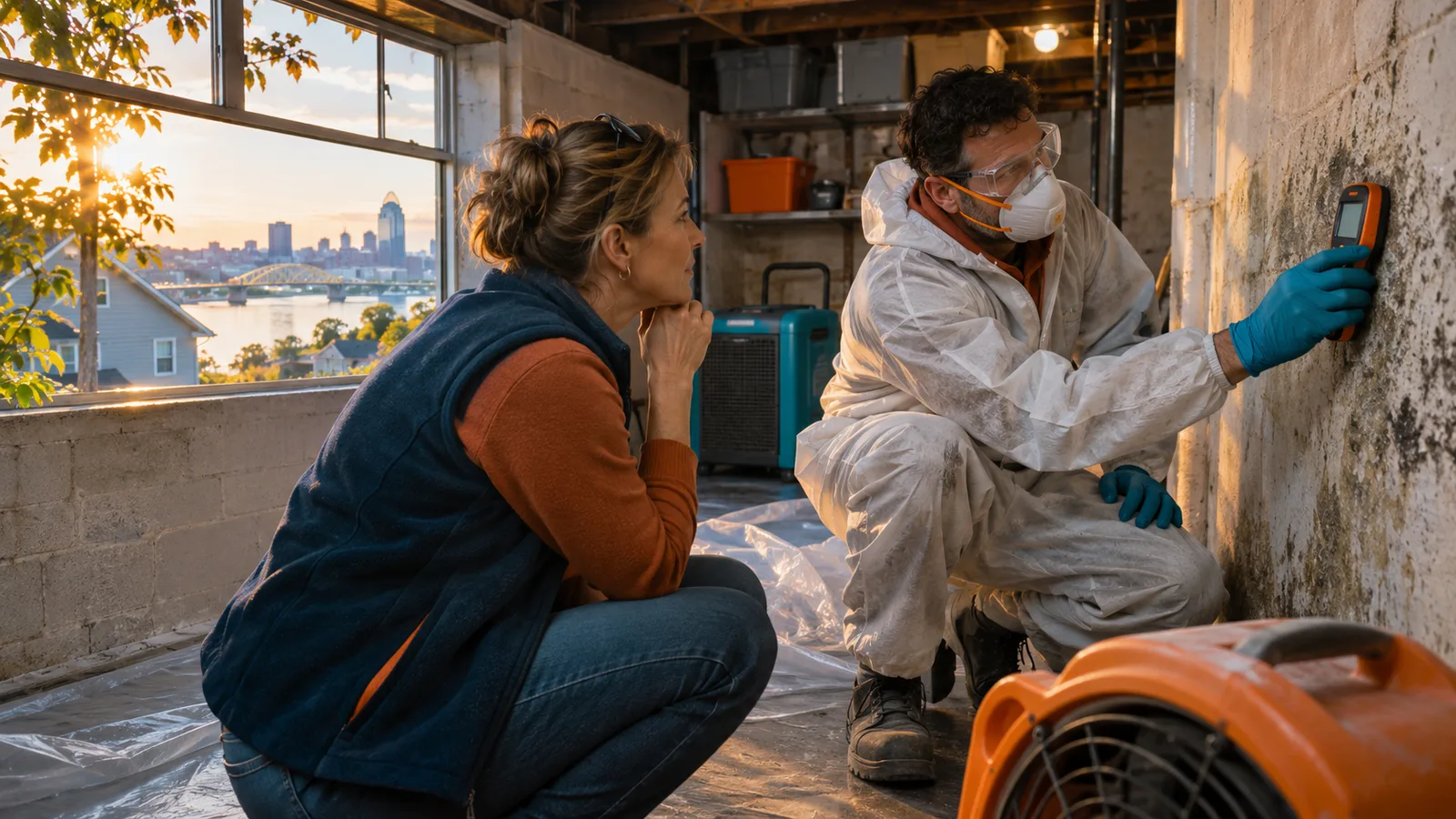
A mold remediation technician in protective equipment inspecting a Cincinnati basement wall with a moisture meter.

Assess the Full Moisture Problem

A Practical Response to Mold and Moisture

Cincinnati mold remediation should address more than visible growth. A sound project identifies where moisture is entering or collecting, contains the affected space, removes materials that cannot be cleaned, and verifies that the work area is ready for restoration. Painting over stains or spraying exposed surfaces does not resolve growth inside drywall, insulation, wall cavities, or flooring assemblies.

Water Restoration Cincinnati approaches the work as a professional water restoration company in Cincinnati, OH, using moisture readings and a defined remediation scope to guide each job. The first visit focuses on what happened, how far the damage may extend, whether the space is currently wet, and what must be protected before disturbance begins.

Local building conditions affect that plan. Older housing in neighborhoods such as Northside and Clifton may contain plaster walls, layered finishes, and enclosed cavities that require selective investigation. Hillside properties around Mount Adams can also have below-grade rooms where drainage and foundation moisture deserve close attention. In Oakley and Hyde Park, finished basements can conceal damage behind drywall, baseboards, cabinets, and carpet. These conditions do not prove that mold is present, but they shape a careful inspection.

Request Emergency Service

Contain, Remove, Clean, and Dry

What Professional Mold Remediation Covers

Remediation begins by separating confirmed damage from assumptions. The affected area is evaluated with visual inspection and moisture measurements. When hidden growth is suspected, limited removal or another investigative method may be recommended. Independent testing can be useful when the source is unclear, a sensitive occupant is involved, or written verification is needed. Testing is not a substitute for correcting a known moisture problem.

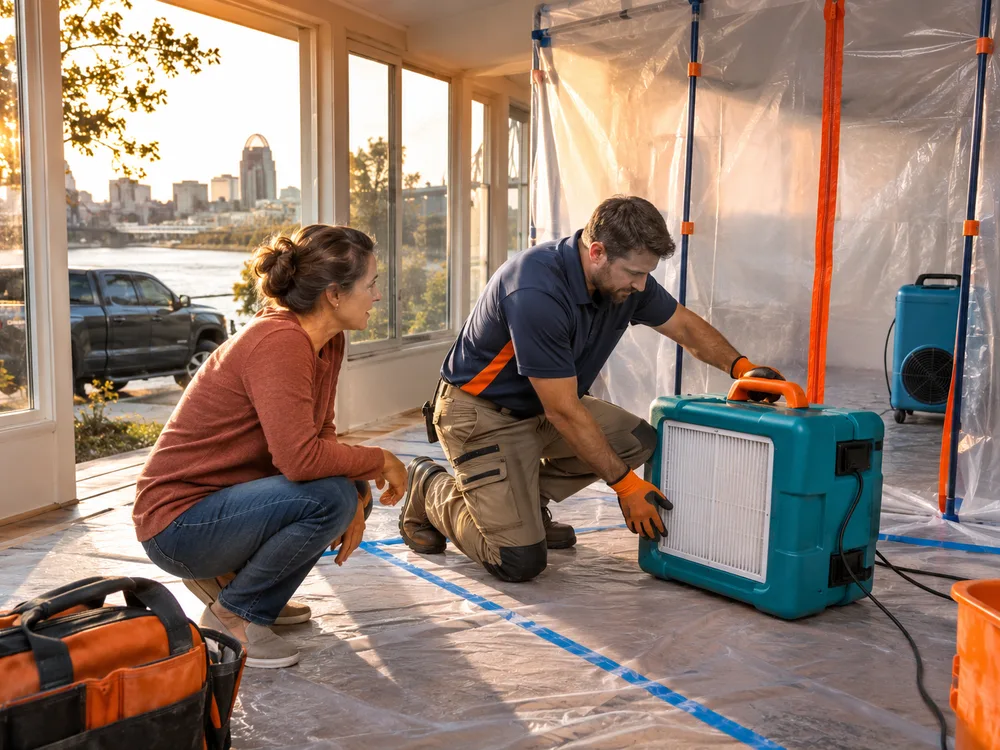
Before removal starts, technicians establish containment suited to the scope. Polyethylene barriers and negative air pressure can help keep airborne particles from moving into unaffected rooms. HEPA-filtered air scrubbers capture fine particulates during the work, while controlled removal reduces unnecessary disturbance.

Porous materials with established growth, such as drywall, insulation, ceiling tile, or carpet padding, often require disposal because contamination can extend beneath the surface. Nonporous and some semi-porous materials may be cleaned with HEPA vacuuming and appropriate damp-wiping methods. The exact decision depends on the material, its condition, and the extent of growth. Salvageable framing may be cleaned and dried rather than replaced.

The work area must be dry before reconstruction. If a leaking pipe, roof opening, exterior drainage problem, or persistent condensation remains active, mold can return after new finishes are installed.

Request Emergency Service
A technician maintaining a contained work zone with polyethylene barriers, a HEPA air scrubber, and clearly protected flooring.

Know When to Investigate

Signs That Deserve a Closer Look

Persistent musty odor

An odor that remains after cleaning can indicate damp materials or concealed growth inside a wall, ceiling, cabinet, or flooring assembly.

Visible spotting or discoloration

Dark, green, white, or irregular staining should be evaluated with the surrounding material and moisture conditions in mind. Color alone cannot identify the species or severity.

Soft or damaged finishes

Swollen baseboards, crumbling drywall, peeling paint, and buckled flooring often indicate that moisture has affected more than the exposed surface.

Recent or repeated wetting

A supply leak, sewer backup, roof leak, appliance failure, or basement seepage can leave moisture trapped in materials after the surface appears dry.

Recurring condensation

Condensation on cool walls, pipes, windows, or ductwork can keep nearby materials damp enough to support recurring growth.

Growth after prior cleaning

When staining returns, the moisture source may still be active or affected material may remain behind the cleaned surface.

Request Emergency Service

From Inspection Through Restoration

Our Cincinnati Mold Remediation Process

  1. 01

    Step 1 of 6

    Inspect and define the affected area

    We review the moisture event, inspect accessible materials, and take moisture readings. The resulting scope identifies likely removal areas, contents that need protection, access needs, and any conditions requiring another qualified trade.

  2. 02

    Step 2 of 6

    Control the moisture source

    Active water must be stopped or managed before remediation can succeed. Depending on the cause, this may involve plumbing repair, exterior correction, ventilation changes, or drying wet structural materials.

  3. 03

    Step 3 of 6

    Build containment

    The work zone is isolated as needed with barriers, protected pathways, and controlled airflow. HVAC openings within the affected area may be covered to limit particle movement during removal.

  4. 04

    Step 4 of 6

    Remove and clean

    Unsalvageable porous materials are removed in a controlled manner and bagged for disposal. Remaining surfaces are HEPA vacuumed and cleaned according to their material and condition.

  5. 05

    Step 5 of 6

    Dry and review the work area

    Dehumidification and air movement may be used where appropriate. Moisture readings help confirm that remaining materials are dry enough for the next phase, and the work area receives a detailed visual review.

  6. 06

    Step 6 of 6

    Prepare for restoration

    Once remediation is complete, removed finishes can be replaced. When independent post-remediation verification is part of the scope, it should occur before containment is removed or reconstruction begins.

A close view of a digital moisture meter taking a reading on exposed wood framing inside a mold remediation containment area.

Protect Unaffected Rooms

Containment Protects the Rest of the Property

Disturbing moldy material can release settled particles into the air, so demolition should not begin before the work zone is prepared. Containment is scaled to the location and scope rather than applied as a one-size-fits-all setup. A small isolated area may require a different plan than several connected rooms or a finished lower level.

Occupied properties also need a clear route for workers and debris. Floor protection, sealed waste bags, and planned exit paths reduce contact with unaffected areas. Personal protective equipment is selected for the work being performed, and HEPA-filtered equipment is used instead of an ordinary household vacuum.

Cincinnati's humid summers can slow drying in basements and closed rooms. During colder weather, condensation may develop where warm indoor air reaches cool foundation walls or poorly insulated surfaces. Indoor relative humidity, material moisture, temperature, and airflow therefore matter throughout the project. A dehumidifier can help manage humidity, but it cannot repair a leak or remove contaminated material.

Request Emergency Service

Planning the Scope

How Much Does Mold Remediation Cost in Cincinnati?

Professional mold remediation in Cincinnati typically costs about $1,500 to $6,000 for a contained residential project, while extensive damage across several rooms or structural assemblies can cost $10,000 or more. A limited, accessible area may fall below that range.

Final price depends on affected square footage, containment needs, material removal, access, drying time, disposal, testing, and whether reconstruction is included. Hidden growth can change the scope after controlled access is opened. The exact cost is confirmed after an on-site inspection and written scope.

Request Emergency Service

Early assessment can limit unnecessary removal and clarify whether you need cleaning, controlled demolition, drying, or independent testing. Describe what you have seen and what moisture event occurred so the next step can be planned.

Request Emergency Service

Practical Answers

Cincinnati Mold Remediation Questions

How long does mold remediation take?

A contained residential project often takes several working days, but drying, testing, and reconstruction can extend the schedule. The duration depends on the affected materials, accessibility, moisture source, containment size, and how quickly remaining framing reaches an acceptable moisture condition. Finished Cincinnati basements may take longer when damage extends behind drywall, built-ins, or flooring.

Do I need mold testing before remediation?

Testing is not always necessary when visible growth and the moisture source are clear, but it can be appropriate when growth is hidden, the extent is disputed, or a sensitive occupant's needs must be considered. Sampling should answer a specific question and is best performed by an independent qualified professional when unbiased verification is needed.

Can I stay in my home during mold removal?

You may be able to remain in the property when the affected area can be securely isolated, but the decision depends on the scope, location, HVAC arrangement, and occupants. Children, older adults, people with respiratory conditions, and immunocompromised occupants should discuss exposure concerns with a medical professional. The work plan should identify restricted areas before removal starts.

Will homeowners insurance pay for mold remediation?

Coverage often depends on the cause of the moisture and the terms, exclusions, and limits in your policy. Mold tied to a sudden covered water event may be treated differently from long-term seepage, maintenance problems, or repeated humidity. Document the damage promptly, preserve relevant photos, and ask your insurer what inspection and estimate records it requires.

Can bleach remove mold from drywall or wood?

Bleach is generally not a complete remedy for mold in porous materials because growth and moisture may extend beneath the surface. Damaged drywall and insulation often require controlled removal, while sound framing may be cleaned with methods selected for the material. Mixing bleach with ammonia or other cleaners can create dangerous fumes and should never be attempted.

What happens to furniture and belongings in the affected room?

Contents are evaluated by material, condition, and proximity to the affected area. Nonporous items may be cleaned, while upholstered or other porous belongings may need specialized treatment or disposal when contamination is established. Items should not be carried through clean rooms without a handling plan, especially when work is taking place in an occupied home.

How do I know the remediation was completed properly?

Completion should include a dry work area, removal of specified damaged materials, no visible dust or debris, and no remaining visible growth within the defined scope. Moisture readings provide useful documentation. When clearance is required, an independent assessor can conduct a visual review and, when justified, post-remediation sampling before reconstruction.

Start With a Clear Scope

Address the Mold Before Restoring the Room

Tell Water Restoration Cincinnati where you found the damage, whether the area is still wet, and what caused the moisture. You will receive a clearer path for containment, removal, drying, and restoration.